5 min read | Cooling Technology | Updated November 2026
Executive summary
- PG25 is a propylene glycol based heat transfer fluid, about 25 percent glycol by volume plus corrosion inhibitors, used in the technology cooling system (TCS) loop between the CDU and the cold plates.
- Glycol adds biostatic and freeze protection but costs some heat capacity and adds viscosity, so it should be chosen deliberately and not copied from an old specification.
- Fluid quality, filtration, material compatibility and a monitoring plan matter as much as the glycol percentage.
Every direct-to-chip liquid cooling loop depends on one component that rarely appears on a drawing: the fluid. The coolant touches copper cold plates, stainless steel piping, gaskets and pump seals for a decade or more. A poor choice shows up later as fouled micro-channels, reduced flow and unplanned maintenance. This guide explains what PG25 is, what to ask for in a specification, and how it fits into a CDU-based design.
What PG25 is and where it sits in the loop
The Open Compute Project (OCP) published guidelines for propylene glycol based heat transfer fluids in liquid cooled racks. They define PG25 as propylene glycol at roughly 24.5 to 27.5 percent by volume, with the balance made up mainly of water and an inhibitor package that typically includes corrosion inhibitors, antifoam and dye [1].
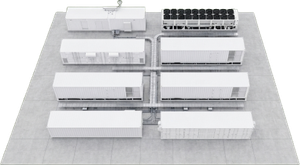
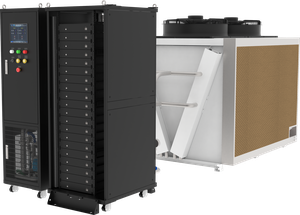
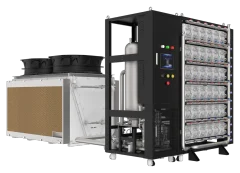
In a typical architecture the facility water system rejects heat outdoors through a dry cooler or other heat rejection equipment. The CDU separates that loop from the TCS loop, which circulates PG25 through the racks. Because the TCS is a small, sealed, tightly controlled loop, its fluid chemistry can be managed far more closely than a large facility loop.
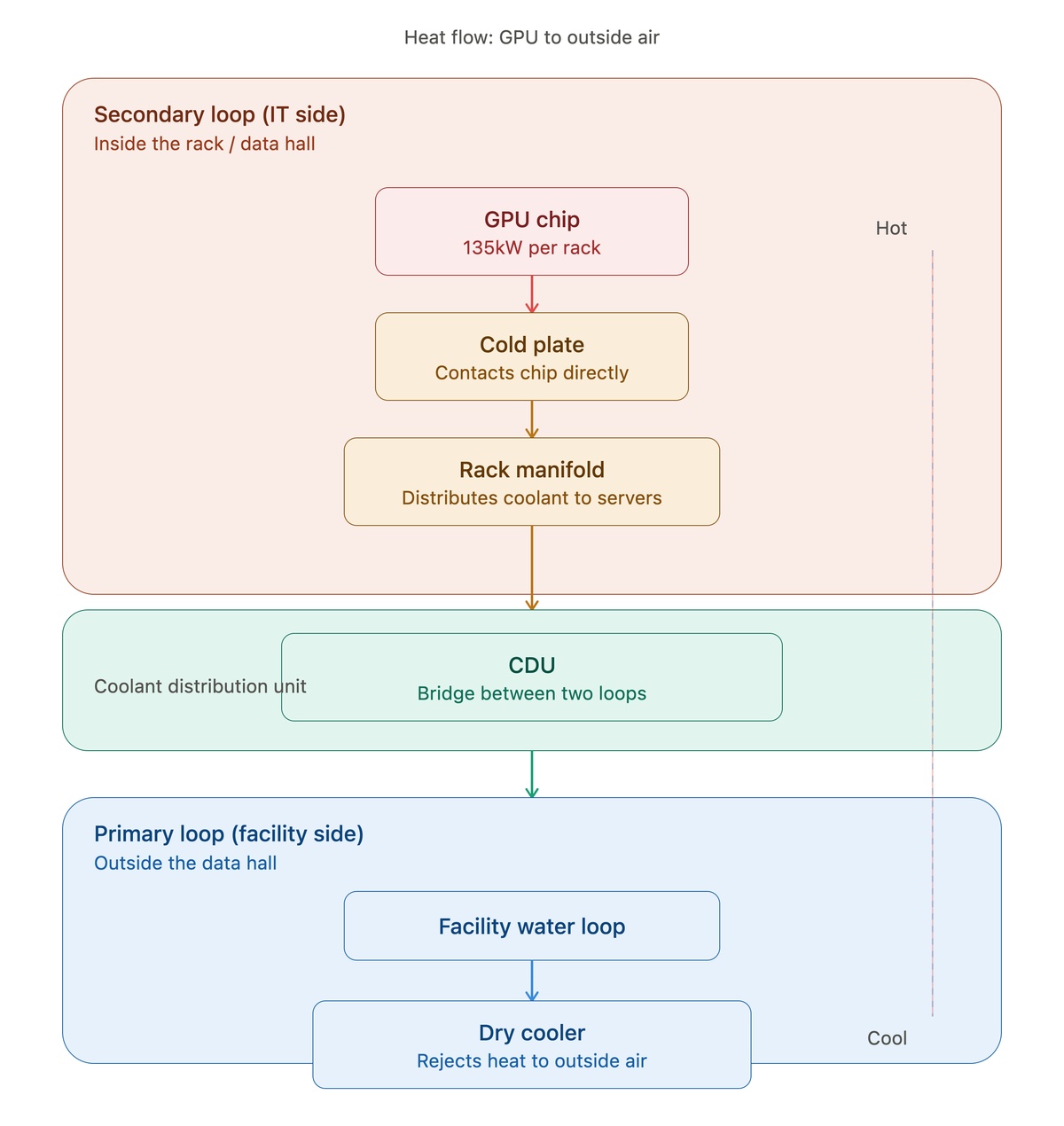
Figure 1. The CDU separates the facility water loop from the rack-side TCS loop that carries PG25.
Key number: a PG25 fluid freezes in roughly the 9 to 14°F range, which protects equipment during transport, storage and cold-weather outages [1].
Why glycol, and what it costs
Propylene glycol is added for two reasons: it suppresses biological growth and it lowers the freeze point. Both are valuable in a loop that may sit idle during commissioning or ship pre-filled.
The trade-off is physical. As glycol concentration rises, specific heat generally falls and viscosity rises, particularly at low temperatures, which raises pressure drop and pumping demand [2]. A Watts engineering article argues that glycol should not be a substitute for root-cause corrosion control, and that many specifications carry 25 percent glycol forward even where freezing is not a real risk [2].
| Factor | Treated water | PG25 |
|---|
| Freeze protection | None | Freeze point roughly 9 to 14°F |
| Biological growth control | Depends on treatment and flushing | Biostatic at the specified concentration |
| Heat capacity | Highest | Somewhat lower |
| Viscosity and pumping load | Lowest | Higher, especially at low temperature |
| Best fit | Climate-controlled sites with strict water treatment | Pre-filled systems, shipped modules, sites with freeze exposure |
What to specify beyond the percentage
The OCP guideline treats the fluid as an engineered product, not a commodity. Four items belong in any specification.
- Water quality. The guideline lists limits for the fresh fluid, including total hardness below 25 ppm, sulfate below 10 ppm and chloride below 5 ppm [1].
- Inhibitor control. Depleted inhibitor should be restored only with supplier-approved additives. Unapproved additives or overdosing can cause precipitation, reduced heat transfer and faster corrosion [1].
- Material compatibility. Verify every wetted material at the maximum operating temperature. Copper and 304L or 316L stainless steel are listed, and elastomers need care: peroxide-cured EPDM is recommended while sulfur-cured EPDM should be used with caution [1].
- Cleanliness and monitoring. Fine filtration during fill and a scheduled laboratory analysis keep micro-channel cold plates clear. ASHRAE guidance for liquid cooled computing covers the wider fluid and temperature framework [3].
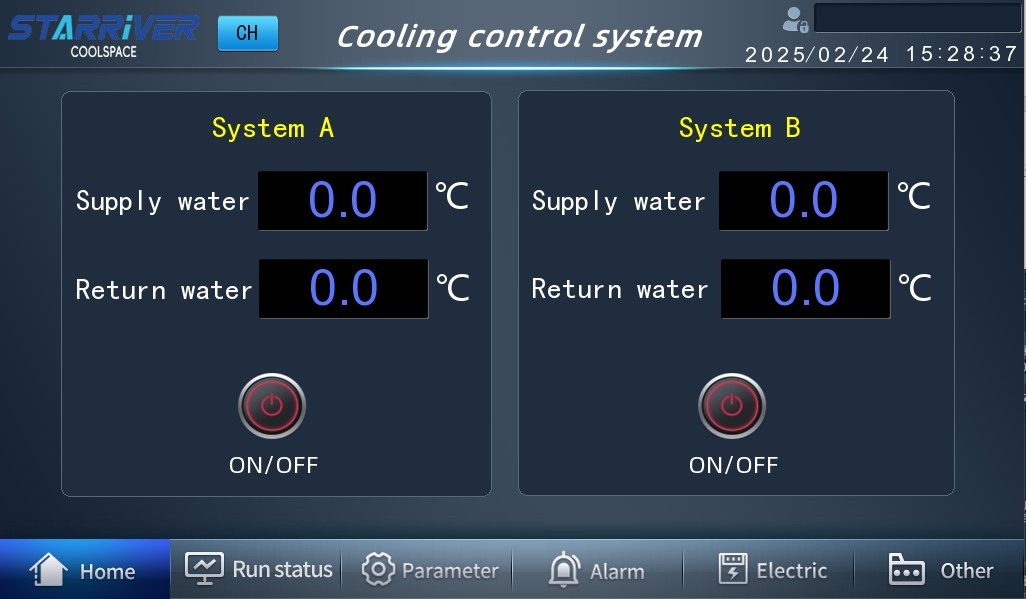
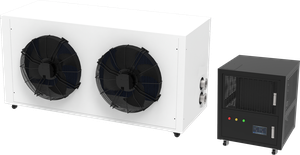
Figure 2. Loop temperature and flow monitoring supports a fluid sampling and maintenance plan.
Designing the TCS around the fluid
Fluid selection feeds directly into CDU and pump sizing. Higher viscosity means the pump curve and heat exchanger must be checked at the real fluid properties and the lowest expected operating temperature, not at water values. Warm-water operation helps, because viscosity falls as temperature rises. For related reading, see our guides on CDU specification for multi-megawatt projects and warm-water liquid cooling.
Cool Space tailors CDUs, dry coolers and cabinets to each project, so the coolant, materials and monitoring plan are confirmed with your engineers rather than fixed in a catalogue number.
Talk to a liquid cooling engineer: share your loop design and fluid requirements, or explore the CoolBase liquid cooling platform.
Frequently asked questions
What does PG25 mean?
It denotes a propylene glycol based heat transfer fluid at about 25 percent glycol by volume, formulated with corrosion inhibitors for liquid cooled racks.
Can a liquid cooling loop run on water only?
Yes, if water chemistry, filtration, corrosion control and biological control are managed rigorously and there is no freeze risk. Many operators still choose PG25 for its biostatic protection.
Can different coolant brands be mixed?
Avoid it unless the supplier confirms compatibility. Mixed inhibitor packages can precipitate and reduce heat transfer.
How often should the fluid be tested?
Set a regular laboratory sampling schedule with your fluid supplier and tighten it for higher-risk loops.
References
- Open Compute Project, Guidelines for Using Propylene Glycol-Based Heat Transfer Fluids in Liquid Cooled Racks (PG25), v1.0.0
- Watts, Rethinking Glycol Use in Closed-Loop Data Center Cooling Systems
- DatacenterDynamics, ASHRAE publishes liquid cooling guidelines

 AI Data Centers
 Crypto Infrastructure