6 min read | Cooling Technology | Updated November 2026
Executive summary
- Warm-water liquid cooling runs the facility loop at temperatures high enough that outdoor air can reject the heat for much of the year.
- ASHRAE classifies facility water by maximum supply temperature, from W17 (62°F) up to W45 (113°F), so the class you design for decides how much mechanical cooling you need.
- Higher chip power pushes supply temperatures down, which is why the water class should be set early, together with the CDU and dry cooler selection.
What warm-water cooling means
In a liquid-cooled data center, coolant carries heat from the cold plates to a coolant distribution unit (CDU). The CDU then passes that heat to a facility water loop. Warm-water cooling simply means that facility loop is allowed to run warm, instead of being chilled to the low temperatures used in legacy air-cooled halls.
The practical benefit is that a dry cooler, which uses outdoor air and no compressor, can reject the heat directly. Fewer chiller hours means lower cooling energy and a simpler plant.
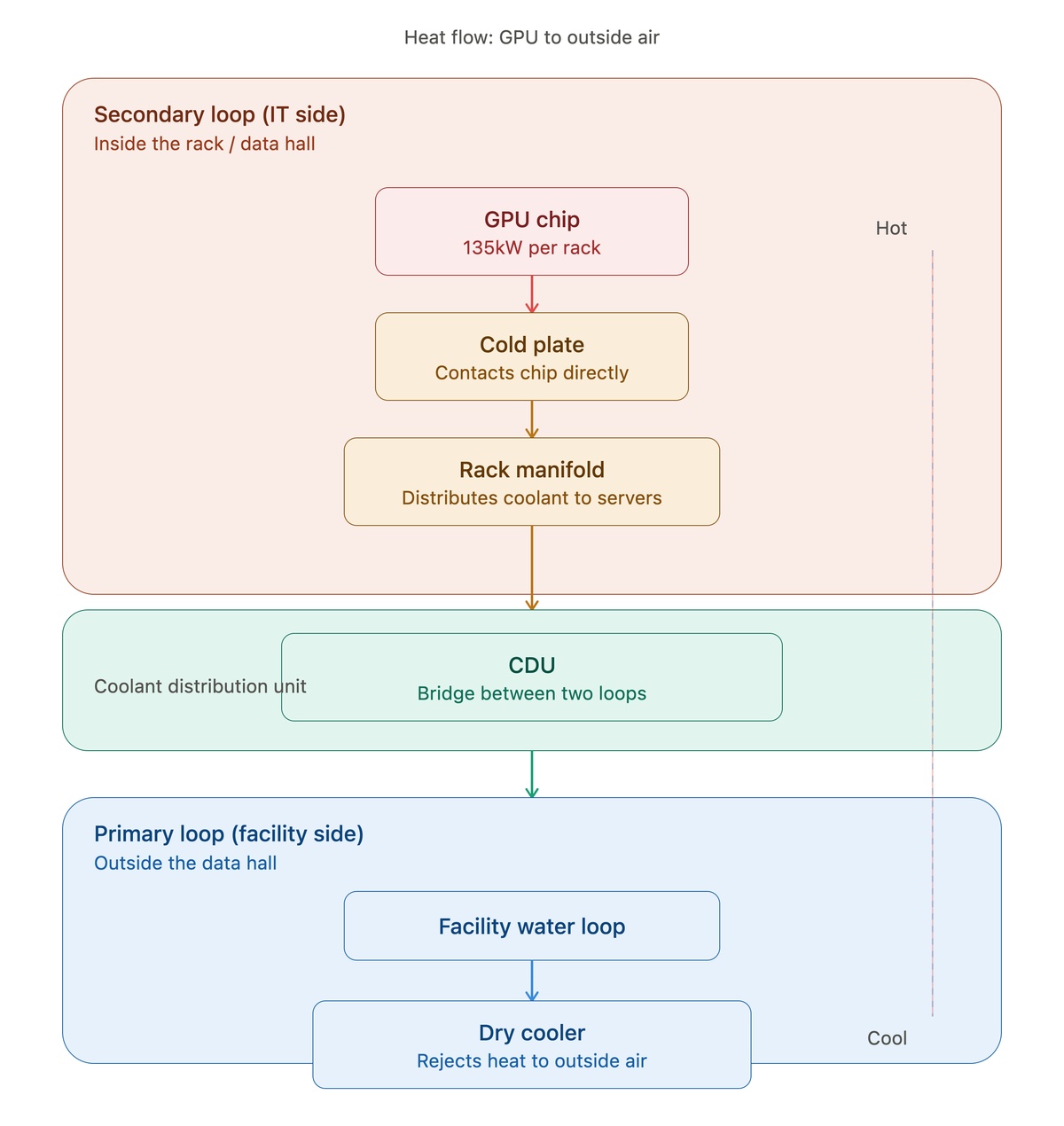
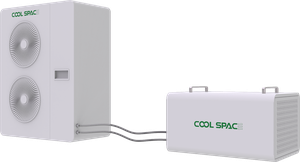
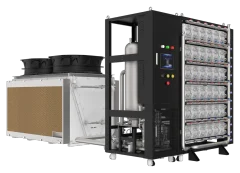
Figure 1: Heat path from the cold plate through the CDU to the outdoor dry cooler.
ASHRAE facility water classes
ASHRAE's liquid cooling guidance names each class by its upper supply-water limit. The fifth-edition scheme replaced the older W1 to W5 labels with W17, W27, W32, W40, W45 and W+, and added the 104°F class because vendors were building equipment for roughly that entering water temperature, according to Upsite's summary of the changes.
| Class | Max supply water | Typical implication |
|---|
| W17 | 62°F | Chilled water or mechanical assist usually required |
| W27 | 80°F | Free cooling for much of the year, assist in the hottest months |
| W32 | 90°F | Wide dry cooler operating window |
| W40 | 104°F | Dry coolers can carry most hours in many climates |
| W45 | 113°F | Few systems run consistently at this level today |
Key point: the class is a compliance target. A facility built for W32 can host any W32-compliant IT equipment without throttling.
Why chip power changes the answer
Hotter chips leave less temperature headroom. In reporting by Data Center Dynamics, a Schneider Electric executive said that at roughly 300W per chip about 95% of sites could run without mechanical assist, while above 500W only about 5% could. The same article notes that Meta has settled on 85°F water for its AI hardware.
The lesson is to size for the hardware you will install next, not the hardware you run today.
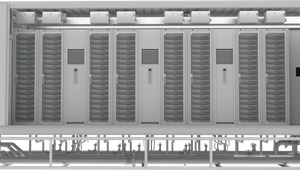
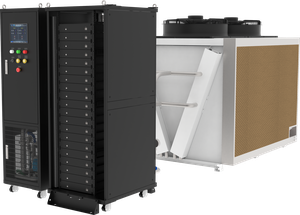
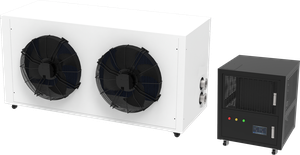
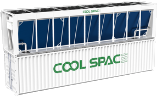
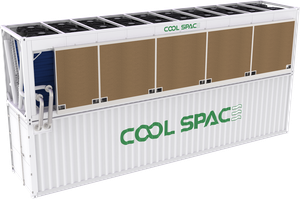
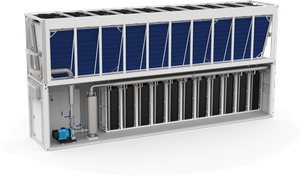
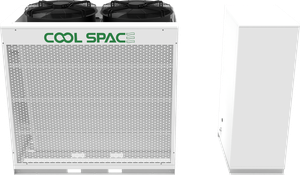
Figure 2: Dry coolers reject facility-loop heat to outdoor air without a compressor.
Design choices that make warm water work
- Approach temperature: a CDU with a tight approach keeps the rack loop cool even when the facility loop is warm.
- Dry cooler sizing: select for the design ambient of the site, up to 131°F, and add an assist stage only where the climate demands it.
- Controls: variable pump and fan speeds track load so the plant does not run at design conditions all year.
- Redundancy: size loops and pumps to the availability target of the hall.
Cool Space tailors each CDU and dry cooler package to the project rather than offering fixed specifications. Talk to a liquid cooling engineer about your water class and climate.
Where the savings come from
Raising loop temperature reduces compressor run time. The same Data Center Dynamics article cites Johnson Controls as estimating a 2 to 3% chiller power saving for each 1.8°F of added chilled-water temperature. Fewer chillers also means less plant to buy, maintain and cool.
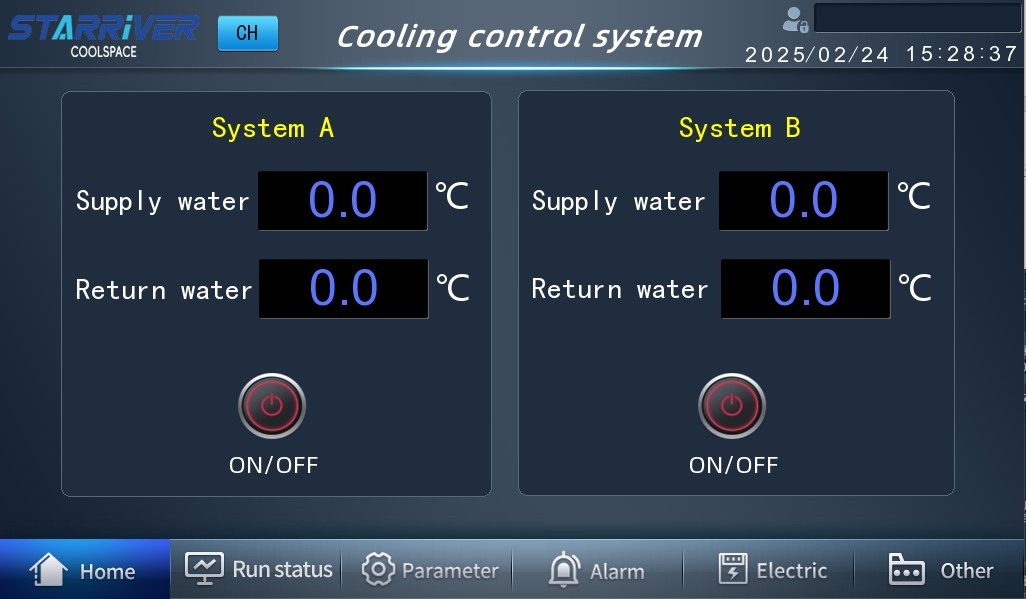
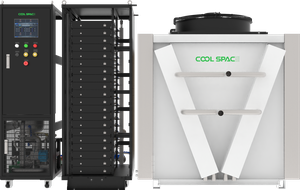
Figure 3: Controls coordinate CDU, pumps and dry coolers as load and weather change.
How to choose a water class for your project
Start from the IT equipment. Ask the server and cold plate vendors for the highest supply temperature at which they guarantee full, unthrottled performance. That number sets the ceiling for the facility loop.
Next, look at the site climate. If the hottest hours still leave a margin between outdoor air and the loop temperature, a dry cooler alone can work. If not, plan an assist stage and size it for those hours only.
Finally, leave room to grow. Operators often find that the next hardware generation needs colder water than the current one, so a design that can step down in temperature protects the investment. A retrofit is easier when the CDU and piping were sized with that step in mind.
Frequently asked questions
Is warm-water cooling the same as direct-to-chip cooling?
No. Direct-to-chip describes how heat leaves the server. Warm-water describes the temperature of the facility loop that takes the heat outdoors. They are normally used together.
Can I eliminate chillers entirely?
Sometimes. It depends on the water class, chip power and local climate. Many designs keep a small assist stage for the hottest hours.
Which ASHRAE class should I choose?
Choose the highest class your IT equipment is qualified for and your climate can support, then confirm with the server vendor.
Does warm water reduce reliability?
Not when the loop is designed for it. Compliance means unthrottled operation across the whole class range.
Related reading
Read our latest liquid cooling guides, explore the CoolBase 1080A-W or contact us for a project review.
References
- Upsite: Major changes to ASHRAE's fifth edition thermal guidelines, liquid cooling chapter
- Data Center Dynamics: Hot water, cold water

 AI Data Centers
 Crypto Infrastructure