Home / All / SR40 V3 FAQ / What type of coolant is required for the SR40 V3 system?

What type of coolant is required for the SR40 V3 system?

Update Time:2026/9/17

Short answer

Two loops, two fluids. The primary loop serving the hardware runs pure, deionized or specially treated water for maximum thermal conductivity and corrosion protection. The external loop to the dry towers runs a water-and-industrial-glycol mixture formulated for the site's minimum ambient temperature.

  • Primary loop: deionized or treated water
  • Prevents galvanic corrosion in hardware
  • Secondary loop: water + industrial glycol
  • Glycol mix set to site minimum temp

Why each loop uses a different fluid

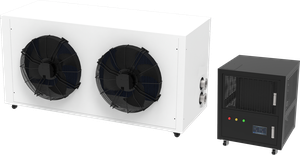
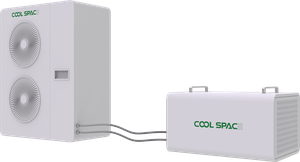
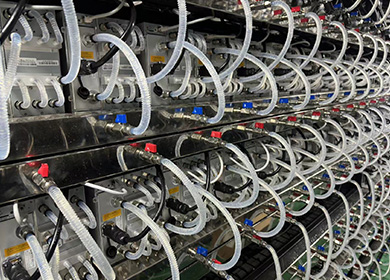
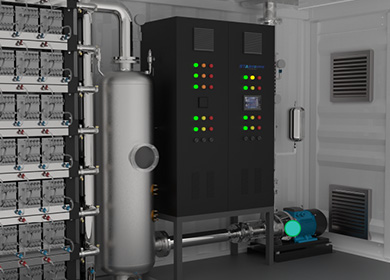
Coolant hose loops and manifold connections inside a hydro cooling container
The two-loop arrangement: treated water inside, glycol mix outside.
  • Primary loop optimizes heat transfer. Water has the highest specific heat capacity of the practical options.
  • Treated water protects the hardware. Deionized or specially treated water prevents galvanic corrosion inside the mining hardware.
  • Secondary loop buys freeze protection. Industrial glycol keeps the outdoor loop liquid at the region's minimum temperatures.
  • There is a trade-off. Higher glycol concentrations add protection but slightly reduce heat dissipation efficiency.
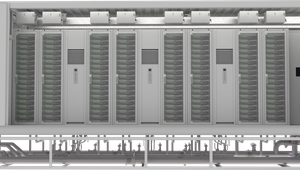
Mining hardware served by the treated-water primary loop
Hardware side — protected by treated water.
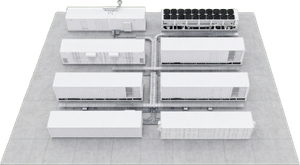
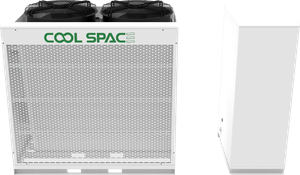
SR40 V3 container and dry cooling tower on the glycol loop
Outdoor side — glycol mix for freeze protection.

Concentration is engineered, not generic

Glycol ratio is set against your deployment region. The mixture is formulated for the minimum ambient temperature at the site — and reviewed against coolant degradation guidance over the operating cycle.

    Are you looking for a reliable supplier of cooling systems for large-scale hydro-cooling data center cluster?

    We can quickly provide customers with market analysis, technical support and customized services.