Home / All / Coolant Management & Fluid Handling / How to determine coolant replacement and degradation?

How to determine coolant replacement and degradation?

Update Time:2026/9/17

Short answer

Replacement is driven by water quality parameters — pH, conductivity, inhibitors and microbial levels — not by the calendar alone. Performance degradation shows up as acidic pH, conductivity surges or flocculent deposits, and the typical service cycle is 1–2 years.

  • Judged by pH, conductivity, inhibitors
  • Microbial levels checked as standard
  • Acidic pH = warning sign
  • Typical cycle: 1–2 years

Degradation indicators and what they mean

IndicatorWhat it signals
Acidic pHThe coolant's corrosion protection is being consumed.
Conductivity surgeDissolved solids or contamination are building up in the loop.
Flocculent depositsParticulate or biological growth is present in the fluid.
Microbial growthBiological contamination is established and needs treatment.

How monitoring and replacement work together

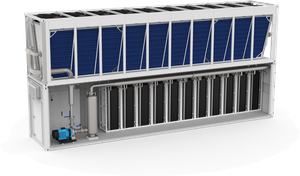
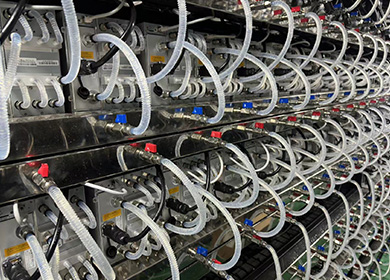
Coolant loop hoses and sampling points inside a container
The loop whose fluid condition is tracked over its service cycle.
  • Quality, not time, triggers replacement. Parameters are measured so the fluid is replaced when it needs it.
  • Inhibitor levels are tracked. Corrosion inhibitors deplete first — that is what acidic pH reflects.
  • 1–2 years is the typical cycle. A planning baseline, not a hard rule.
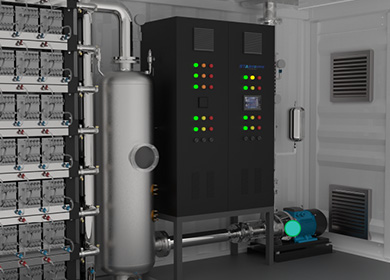
Hardware protected by the coolant loop
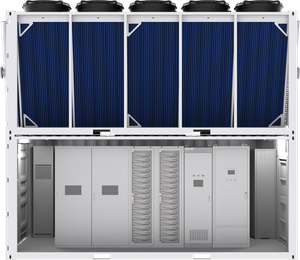
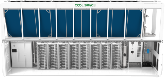
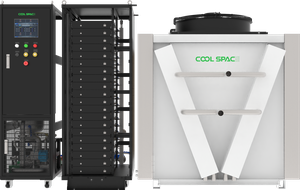
The hardware the fluid protects.
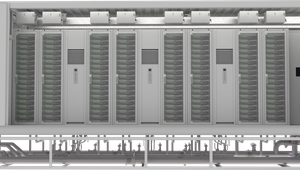
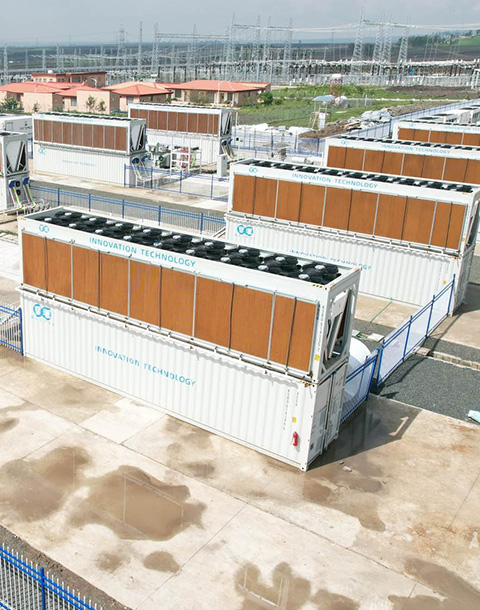
Rack wall in continuous operation
Loops under continuous load age on a schedule of their own.

    Are you looking for a reliable supplier of cooling systems for large-scale hydro-cooling data center cluster?

    We can quickly provide customers with market analysis, technical support and customized services.