Home / All / Coolant Management & Fluid Handling / Purified water vs. glycol: How do ratios affect cooling?

Purified water vs. glycol: How do ratios affect cooling?

Update Time:2026/9/17

Short answer

Purified water has the highest specific heat capacity of the practical coolant options, but no freeze or corrosion protection on its own. Adding ethylene glycol provides both protections — at the cost of slightly reduced heat dissipation efficiency as concentration rises.

  • Purified water: best heat capacity
  • Glycol adds freeze protection
  • Glycol adds corrosion protection
  • Higher glycol = lower efficiency

The trade-off in one view

CoolantStrengthLimitation
Purified waterHighest specific heat capacity — best raw heat transfer.No freeze protection and no corrosion protection by itself.
Water + ethylene glycolFreeze and corrosion protection for outdoor and cold-site loops.Slightly reduced heat dissipation efficiency at higher concentrations.

How this maps onto the two-loop design

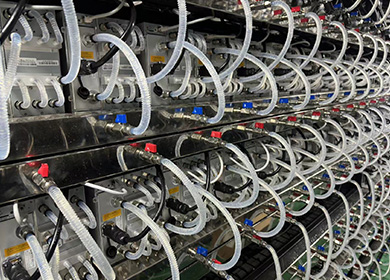
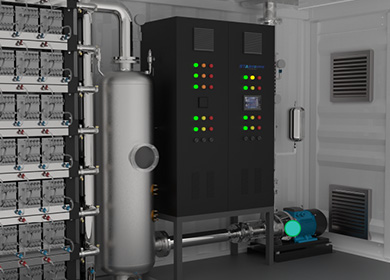
Coolant hose loops and manifold inside a container
The two-loop arrangement puts each fluid where its strengths matter.
  • Hardware side favors water. Where freeze risk is absent, the primary loop maximizes thermal conductivity.
  • Outdoor side favors glycol. The secondary loop to the dry towers needs freeze and corrosion protection.
  • Concentration is a set point. It is engineered to the site's minimum ambient temperature — not maximized by default.
Hardware wall served by the primary loop
Hardware side of the loop.
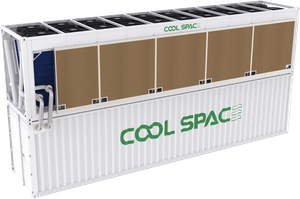
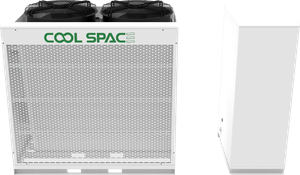
Container and dry tower on the secondary loop
Outdoor side carrying the glycol mix.

    Are you looking for a reliable supplier of cooling systems for large-scale hydro-cooling data center cluster?

    We can quickly provide customers with market analysis, technical support and customized services.