7 min read | High-Density Compute Data Center Infrastructure | Updated November 2026
The dry cooler vs cooling tower decision locks in your site's water demand, your cooling energy bill and your hottest-day risk for the life of the plant. Get it wrong and you either chase a water permit you cannot secure or pay for fans and compressors you never budgeted.
Executive summary
- A dry cooler rejects heat to outdoor air with no evaporation, so it uses essentially no makeup water. A cooling tower evaporates water to reach a lower fluid temperature, so it trades water for efficiency.
- The deciding variables are the facility water temperature your IT equipment tolerates, the site's design ambient conditions, and how much water you can reliably source and discharge.
- Many liquid-cooled projects use a hybrid: a dry cooler as the base plant, with an assist stage sized only for the hottest hours.
How each heat rejection method works
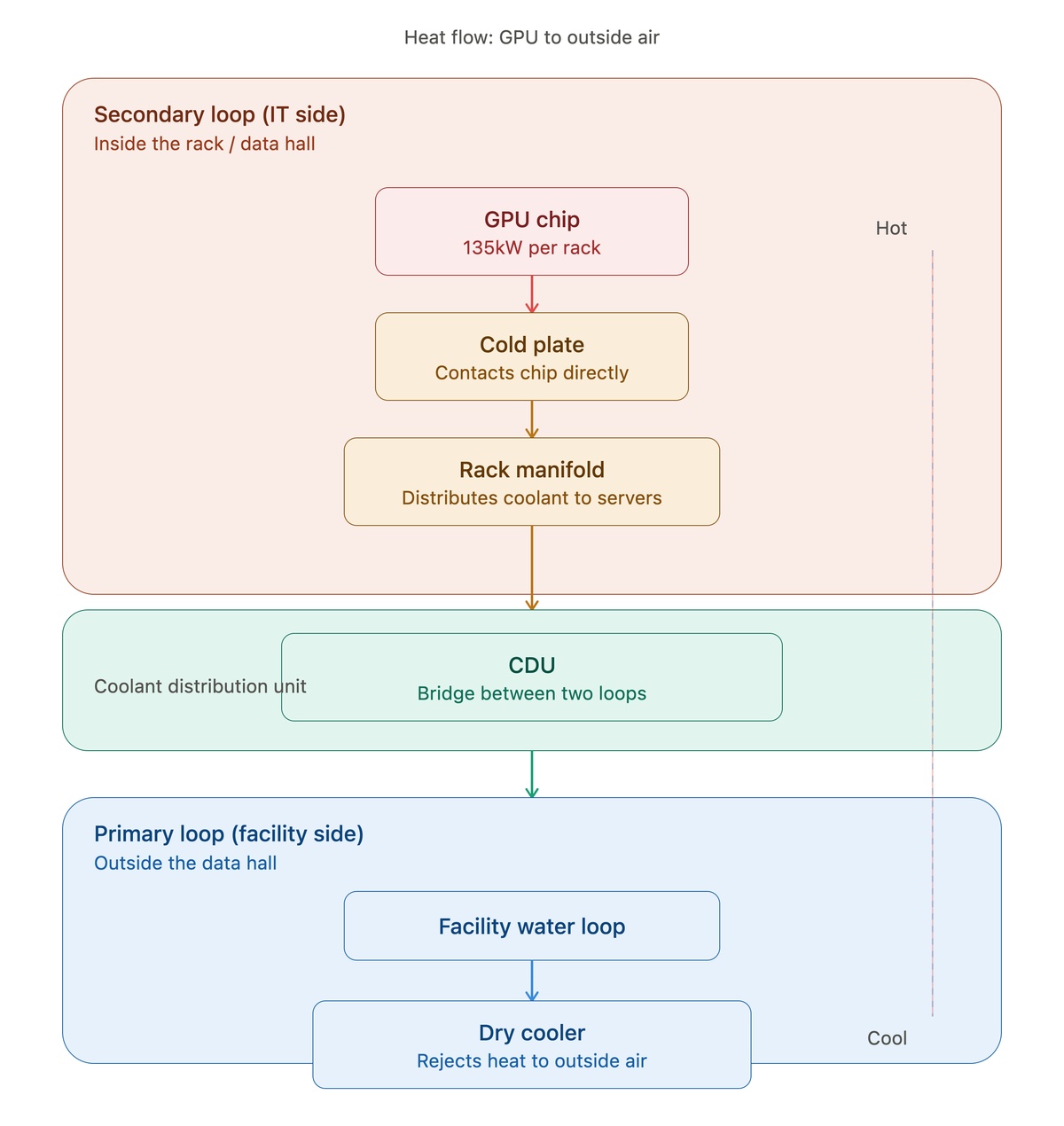
In a liquid-cooled data center, the coolant distribution unit (CDU) passes server heat into a facility water loop. That loop then has to dump the heat outdoors. This final step is called heat rejection, and the equipment you choose sets both your cooling energy and your water footprint.
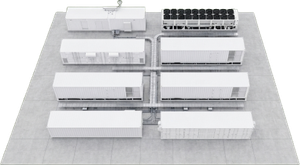
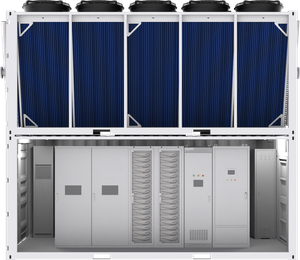
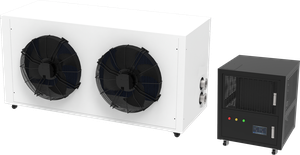
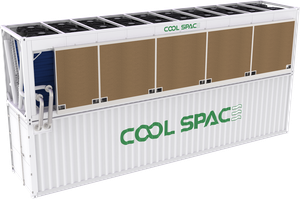
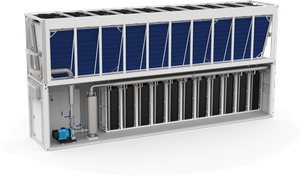
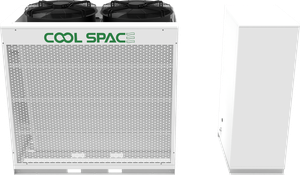
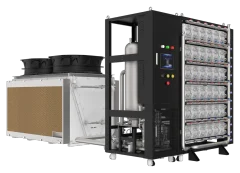
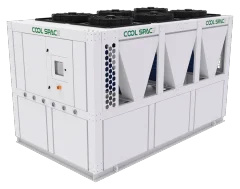
A dry cooler is a closed-loop heat exchanger. Facility fluid runs through finned coils while variable-speed fans pull outdoor air across them. Nothing evaporates and the fluid never touches the air.
A cooling tower works differently. Water is exposed to moving air and a small share of it evaporates, which carries heat away very effectively. The cost is continuous makeup water and water treatment to control scale and biological growth.
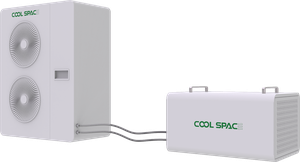
Figure 1: Heat path from the rack through the CDU to an outdoor dry cooler.
Why the temperature limit differs
A dry cooler can only cool fluid to a few degrees above the outdoor dry-bulb temperature. An evaporative tower can approach the lower wet-bulb temperature, which is never higher than dry-bulb and is much lower in dry climates. That gap is why towers can deliver colder water on a hot afternoon.
It also explains why warm-water design matters. If your IT equipment accepts a higher facility supply temperature, a dry cooler can carry more of the year without help. Our guide to warm-water liquid cooling and ASHRAE classes shows how the W17 (62.6°F) through W45 (113°F) classes translate into plant options.
Dry cooler vs cooling tower: side-by-side comparison
| Factor | Dry cooler | Cooling tower |
|---|
| Makeup water | Essentially none in dry operation | Continuous (evaporation, blowdown) |
| Limiting air temperature | Dry-bulb | Wet-bulb |
| Fan energy | Higher, because coil surface is large | Lower for the same heat load |
| Footprint | Larger plot or roof area | More compact |
| Water treatment and maintenance | Fans and coil cleaning | Chemical dosing, basin cleaning, biological control |
| Fluid in the facility loop | Closed, can use glycol mix for freeze protection | Open tower, usually isolated by a heat exchanger |
| Site constraint | Space and hot-hour performance | Water supply, discharge and permits |
The U.S. Department of Energy's Lawrence Berkeley National Laboratory data center energy report describes this same trade-off: dry coolers conserve water compared with evaporative cooling towers, while air-cooled chillers use no water but consume more energy.
Where adiabatic and hybrid systems fit
An adiabatic assist wets the air or the coil surface only when ambient temperature is high. The rest of the year the unit runs dry. This captures part of the evaporative benefit while limiting annual water use.
The trade-off is that water use is now tied to your hottest hours, which are often the same hours as peak grid demand and drought stress. Ask how much water the assist stage needs per hot hour, and whether the site can supply it on the worst day, not the average day.
Sizing a heat rejection plan? Talk to a liquid cooling engineer about dry cooler options tailored to your site.
How to choose a heat rejection method for liquid cooling for AI data centers
Work through these questions in order. They narrow the option set faster than comparing equipment catalogs.
- Set the facility water ceiling. Get the highest supply temperature your server and cold plate vendors guarantee without throttling.
- Define the design ambient. Use the site's extreme design conditions, not annual averages. Cool Space dry cooler packages are specified for ambient conditions up to 131°F.
- Quantify water availability. Confirm supply, treatment, discharge rules and any permit limits before you commit to evaporation.
- Check the footprint. Dry coolers need more area. Confirm that the roof or yard can take them, including airflow clearances.
- Plan for the next hardware generation. Hotter chips may need colder water later, so leave headroom for an assist stage.
This sequence is the logic behind water usage effectiveness (WUE) planning: decide the water budget first, then pick equipment that fits it.
Cooling for 100 kW racks: why the CDU and the dry cooler must be sized together
A CDU's approach temperature, the gap between the rack-side loop and the facility loop, uses up part of your temperature budget. A tight CDU approach leaves more room for the dry cooler's own approach to outdoor air. Sizing them separately is how projects end up needing an assist stage they did not plan for.
The same logic applies to architecture. A centralized or distributed CDU layout changes pipe lengths, pump power and the number of dry cooler circuits, so decide it alongside heat rejection. For very dense halls, see our notes on rack density from 10 kW to 100 kW.
Operations and maintenance considerations
Dry coolers need fan and motor service, coil cleaning, and monitoring of fluid quality. Towers add water treatment, blowdown management and seasonal basin maintenance. Over the life of a plant, the second list is usually longer and more dependent on local water quality.
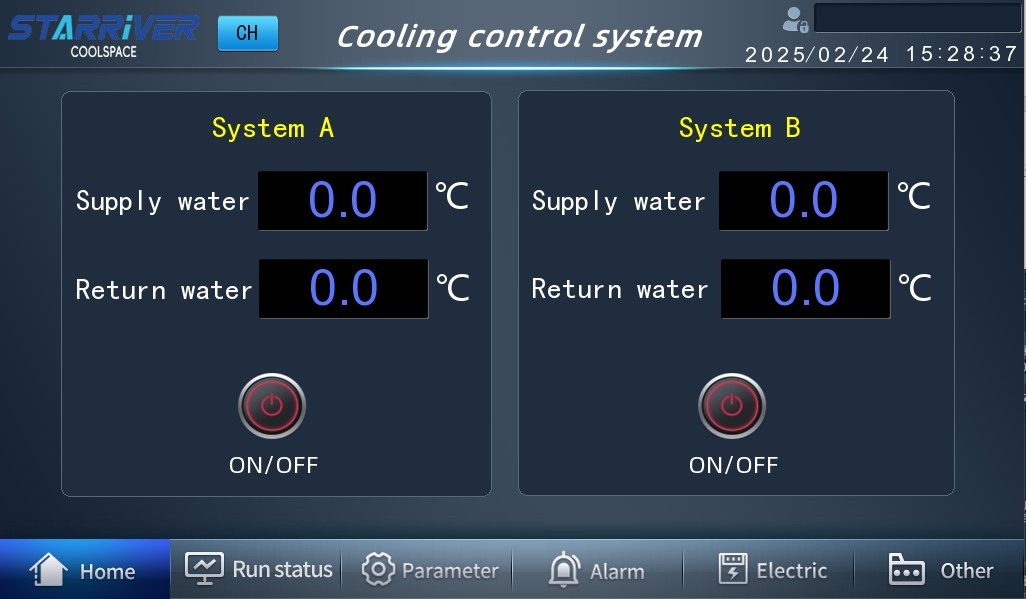
Whichever option you choose, remote monitoring of fan speed, loop temperatures and pump status shortens fault diagnosis. That is a strong argument for commissioning the controls together with the mechanical plant.
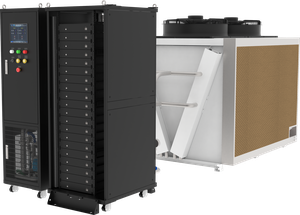
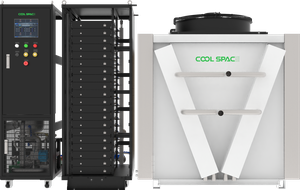
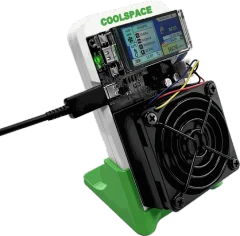
Figure 2: Control panel for monitoring CDU, pump and dry cooler loop status.
Next step
If you are working through the dry cooler vs cooling tower decision for a liquid-cooled project, send our engineers your target facility water temperature, design ambient and water constraints through the AI data center cooling page or contact page, and we will recommend a plant configuration for your site. Cool Space tailors each project rather than selling fixed catalog specifications.
Next step: See the CoolBase 1080A-W liquid cooling cabinet or Talk to a liquid cooling engineer to plan your project.
Frequently asked questions
Does a dry cooler use any water?
In dry operation a dry cooler uses essentially no makeup water because heat moves to outdoor air through finned coils. Units fitted with an adiabatic assist use water only during hot periods.
Is a cooling tower more efficient than a dry cooler?
A tower can deliver colder fluid because it approaches the wet-bulb temperature, and it typically needs less fan energy for the same load. The cost is continuous water use and water treatment.
Can a dry cooler support liquid cooling for AI data centers?
Yes, when the IT equipment accepts a warm enough facility water temperature for the site's climate. Many designs add a small assist stage for the hottest hours.
Which option suits a water-constrained site?
A dry cooler is usually the lower-risk starting point because it removes dependence on makeup water. Confirm hot-day performance before you rely on it.
References
- Lawrence Berkeley National Laboratory, 2024 United States Data Center Energy Usage Report
- Upsite Technologies, Major changes to ASHRAE's fifth edition of Thermal Guidelines, part 3: liquid cooling chapter updates

 AI Data Centers
 Crypto Infrastructure